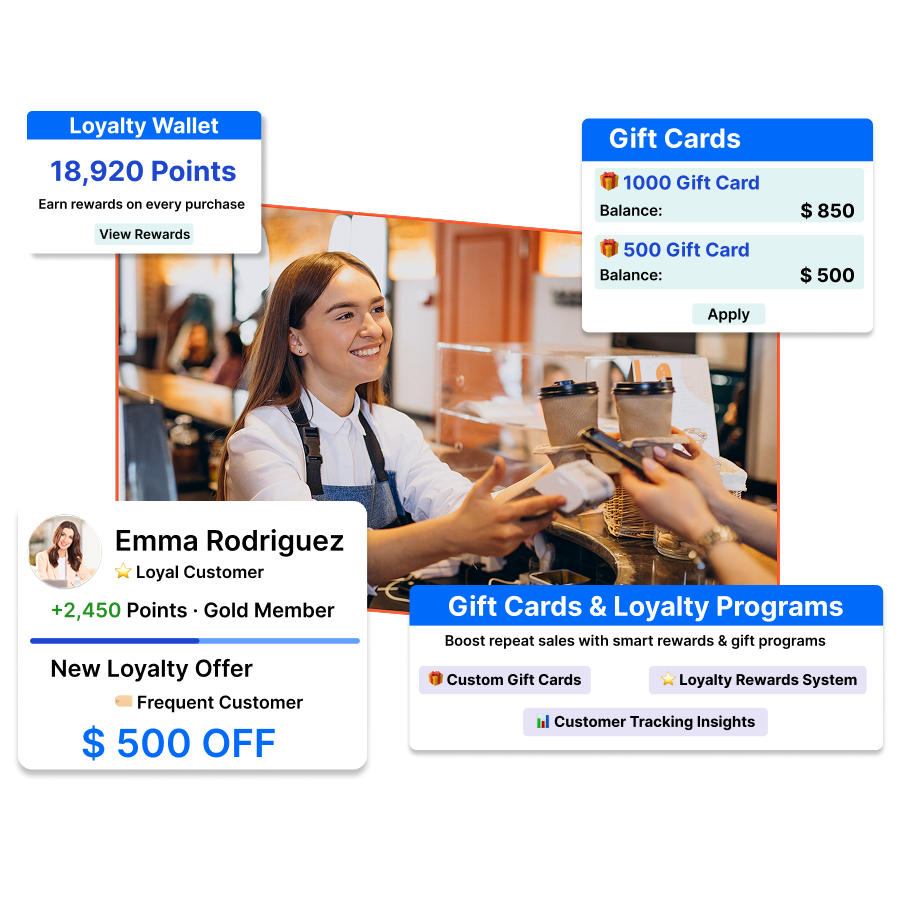
Customer lifetime value (CLV) is one of the most important metrics for any restaurant or retail business. It measures the total revenue you can expect from a single customer over the entire duration of their relationship with your business. And the most effective way to increase CLV? A well-designed loyalty program.
Why Loyalty Programs Work
Loyalty programs leverage a psychological principle called the endowment effect — people value things more when they have invested in earning them. When a customer has accumulated points toward a free coffee or a discount on their next purchase, they are significantly more likely to choose your business over a competitor.
Businesses with loyalty programs see 20-30% higher customer retention rates and customers who spend 15-25% more per visit than non-members.
Types of Loyalty Programs
Different businesses benefit from different loyalty structures. Here are the most effective models for restaurants and retail stores.
Points-Based Programs
Customers earn points for every dollar spent. Points accumulate and can be redeemed for rewards. This is the most flexible model and works well for both restaurants and retail stores. The key is setting the right earn rate — typically 1 point per dollar spent, with 100 points equaling $1 in value.
Visit-Based Programs
Buy 10 get 1 free is the classic example. This works exceptionally well for coffee shops, bakeries, and quick-service restaurants where the average transaction is relatively low but visit frequency is high. The digital version tracks visits automatically through the POS, eliminating the need for paper punch cards.
Tiered Programs
Customers unlock higher tiers with better rewards as they spend more. A coffee shop might have Silver (free drink after 10), Gold (free drink after 8 plus birthday treat), and Platinum (free drink after 6 plus exclusive access to new flavors). Tiered programs create aspirational goals that drive higher spending.
- Points-based: 1 point per dollar, 100 points = $1 value
- Visit-based: Buy 10 get 1 free — simple and effective
- Tiered: Multiple levels create aspirational spending goals
- Hybrid: Combine points with visit milestones for best results
Integrating Loyalty With Your POS
The key to a successful loyalty program is seamless integration with your POS. When customers earn and redeem rewards automatically at checkout, the program becomes effortless for both staff and customers. Modern POS systems with built-in loyalty track points, manage rewards, and handle redemptions without any extra work from your team.
Launching Your Loyalty Program
Select points-based, visit-based, or tiered based on your business type
Define what customers earn and what they can redeem for
Set up earn rates, reward rules, and redemption options
Show staff how to enroll customers and process redemptions
Announce the program in-store, on social media, and via email
Measuring Loyalty Program Success
Once your loyalty program is running, track these key metrics to measure its impact: enrollment rate (what percentage of customers join), redemption rate (are customers using their rewards?), incremental revenue (are members spending more than non-members?), and retention improvement (are members visiting more frequently?).
- Enrollment rate: Target 30-50% of transactions enrolling
- Redemption rate: 50-70% indicates healthy engagement
- Incremental spend: Members should spend 15-25% more per visit
- Frequency increase: Members should visit 20-30% more often
Conclusion
A well-designed loyalty program integrated with your POS is one of the highest-ROI investments you can make. It increases customer lifetime value, drives repeat visits, and builds a connection between your brand and your customers that goes beyond individual transactions.